Wound Care Products Chitosan
Chitosan
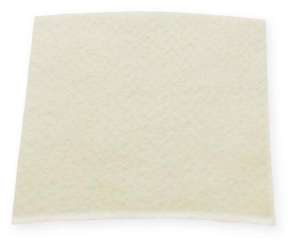
KytoCel® / Sequa®San Chitosan Wound Dressings are composed of 100% chitosan fibers, which was natural starch (polymer) derived from the shells of crustaceans.
It has similar absorbency and gelling characteristics as carboxymethyl cellulose, but with the additional benefits of being hemostatic and bacteriostatic.
MERKMALE
- Made of natural fibers
KytoCel® Chitosan Wound Dressings are composed of 100% chitosan fibers, which was natural starch (polymer) derived from the shells of crustaceans.
It has similar absorbency and gelling characteristics as carboxymethyl cellulose, but with the additional benefits of being hemostatic and bacteriostatic.

Hämostatische Eigenschaften
Aufgrund der positiven Ladung in seiner Struktur kann Chitosan rote Blutkörperchen und Blutplättchen effektiv binden und aggregieren, durch die Aktivierung der Blutplättchen den Gerinnungsprozess aktivieren, die Synthese von Fibrinkleber beschleunigen, die Gefäßverengung stimulieren und schließlich die Mikrogefäße verschließen.
Gelierung
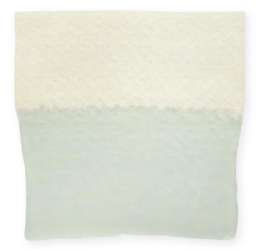
Durch die Absorption des Wundexsudats wandelt sich KytoCel®-Chitosan in ein kohäsives Gel um, das einen engen Kontakt des Verbandes mit dem Wundbett ermöglicht. Dies trägt zur Schaffung feuchter Wundbedingungen und damit zum Heilungsprozess bei.
Bakteriostatische Eigenschaften
Die gelierenden und bakteriostatischen Eigenschaften des Verbandes helfen dabei, die Bakterien im Verband einzuschließen und Infektionen vorzubeugen.
Effektives Exsudatmanagement
- KytoCel® Chitosan dressing is 20% more absorbent than other gelling dressings. The added absorbency helps to prevent the maceration of peripheral wound skin.
KytoCel® chitosan dressing has greater wet strength than other gelling dressing, allowing one piece removal on dressing change.
Indikationen
- Indicated for moderate to heavily exuding chronic and acute wounds and may be used to control minor bleeding in superficial wounds.
Pressure sores
Venous ulcers
Diabetic ulcers
Leg ulcers
Cavity wounds
Donor sites and Graft sites
Surgical wounds (e.g. post-operative, wounds left to heal by secondary intent)
Skin abrasions and lacerations
Superficial and partial thickness burns
Trauma Wounds
Klinische Fälle
Trauma Injury – category 3 skin tear [ Ref 6 ]
Wound with KytoCel healed in 11 days.Foot Ulceration[ Ref 7 ]
Wound healed with KytoCel in 18 weeks without adverse reaction and re-ulceration
SPEZIFIKATIONEN
Einzelverpackung: abziehbarer Beutel.
Sekundärverpackung: Einlagige Wellpappe.
Tertiärverpackung: Doppelwandige Wellpappe.
| Tpye | REF | Size(inch/cm) | Pkg. |
| SHEET | 3050 | 2” x 2”(5 x 5 cm) | 10/box, 100/carton |
| 3051 | 4”x 4”(10 x 10 cm) | 10/box, 100/carton | |
| 3052 | 6”x 6”(15 x15 cm) | 10/box, 100/carton | |
| ROPE | 3056 | 1”x 18”(2.5 x 45 cm) | 10/box, 100/carton |
References
Ref 1. Yuanliang Xia, Ruohan Yang, Hengyi Wang, Yuehong, Changfeng Fu Application of chitosan-based materials in surgical or postopera- tive hemostasis (Sec. Biomaterials and Bio-Inspired Materials)
Ref 2. Ijaz Bano, Muhammad Arshad, Tariq Yasin, Muhammad Afzal Ghaur Muhammad YounuChitosan: A potential biopolymer for wound management(I. Bano et al. / International Journal of Biological Macromolecules 102 (2017) 380–383)
Ref 3.Ying Liu, MS; JiaLi Chen, MS, RN; PeiFang Li, MSN, RN; and Ning Ning, MS, RN The Effect of Chitosan in Wound Healing: A System- atic Review(ADV SKIN WOUND CARE 2021;34:262–6.)
Ref 4.Xiaohui Mo, MSc; John Cen, MSc; Elaine Gibson, BSc (Hons); Robin Wang; Steven L. Percival, PhD An open multicenter comparative randomized clinical study on chitosan (Wound Rep Reg (2015) 23 518–524)
Ref 5. Rommel Orig and Joseph Singleton A non-comparative evaluation of a chitosan gelling fibre(British Journal of Nursing, 2016, Vol 25, No 3)
Ref 6. Jackie Stephen-Haynes, Elaine Gibson, Michelle Greenwood. Chitosan: a natural solution for wound healing (JCN, 2014, Vol 28, No 1)
Ref 7. Angela Walker. Podiatry evaluation of a chitosan gelling fibre dressing in diabetic foot ulceration[J]. British journal of nursing, 2016, 25(12), S51-S58
DOCUMENTS